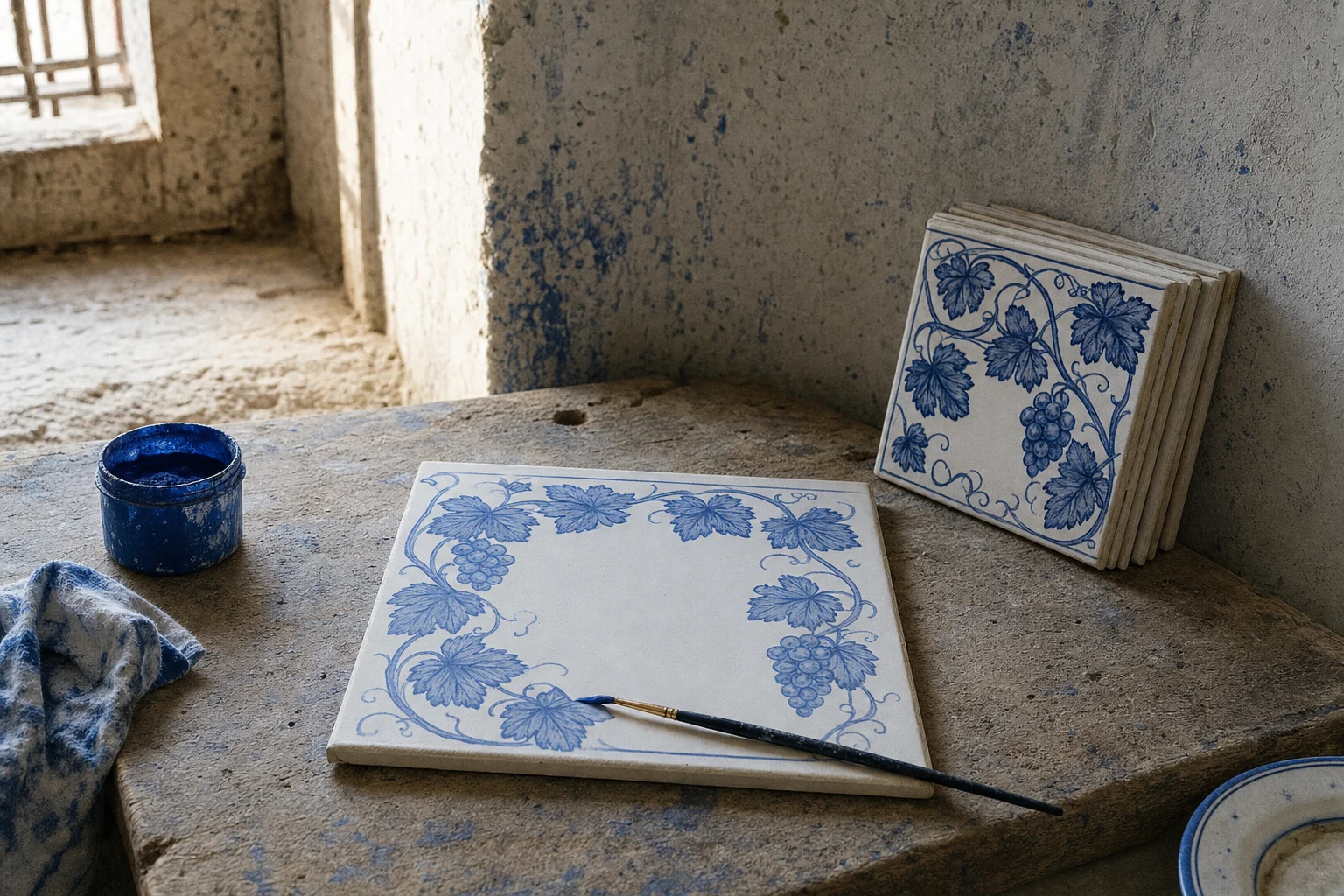
Your Name on a Seville Street Sign, Painted by Rule
The Triana street-sign tile, built by rule. Azulejos de letras is a serif typeface made of strokes rather than a font...
The tile and mosaic pages on this site, and how they are made. A rule makes the repeat, a material makes it feel made: tin glaze, cut tile, pressed cement, Roman tesserae, enamel and gilt. The engine underneath is an npm package called azulejeria.
None of the art pages in this run contains a picture. Each one grows a repeat from a seed and paints it the way a material would, so the same page can be a wall of Talavera cobalt, a Nasrid dado, a Barcelona hallway floor or a Roman pavement depending on which rule and which material you hand it. The posts here explain the rules, the brushwork and the engine they share, azulejeria, which the pages import from a Hugo mount of the package source.
The pieces, in the order they were made:
Hispania and Sutton Hoo have no post yet; Trencadís and Delft share one, Sebka and Fajalauza another, Papel Pintado has its own, Rejería and the Mantón share Iron and Silk, Rosa y Granada and Encaustic share Clay in Clay, and Azulejos de letras has Your Name on a Seville Street Sign, Painted by Rule. The plan for what comes next has two interactions left in the queue (drawing one eighth of a tile yourself, and a print-resolution export of a tile), and every two or three pieces get a post here.
The Triana street-sign tile, built by rule. Azulejos de letras is a serif typeface made of strokes rather than a font...
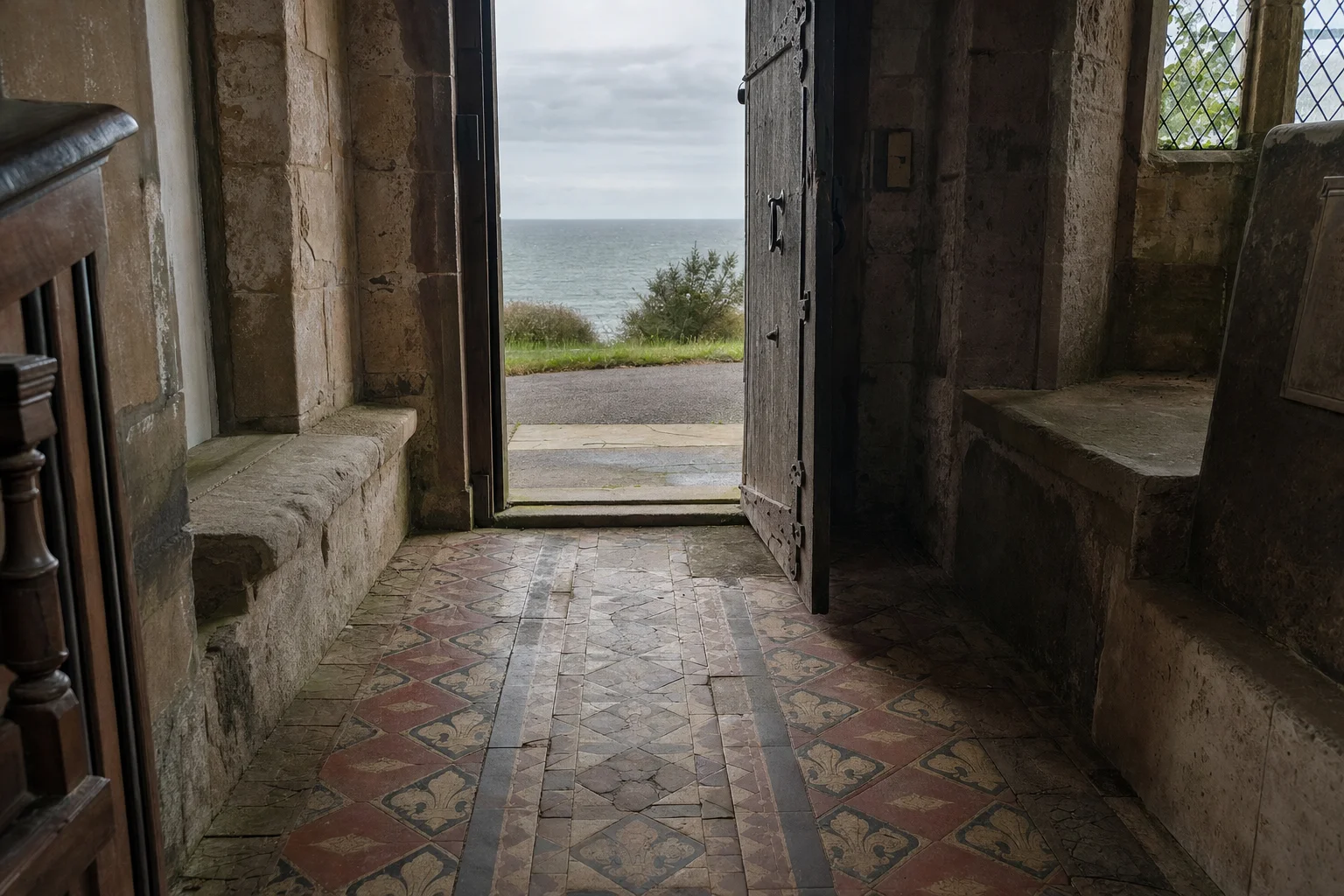
Two English floors six hundred years apart, made the same way. Rosa y Granada is Catherine of Aragon's rose and pomeg...
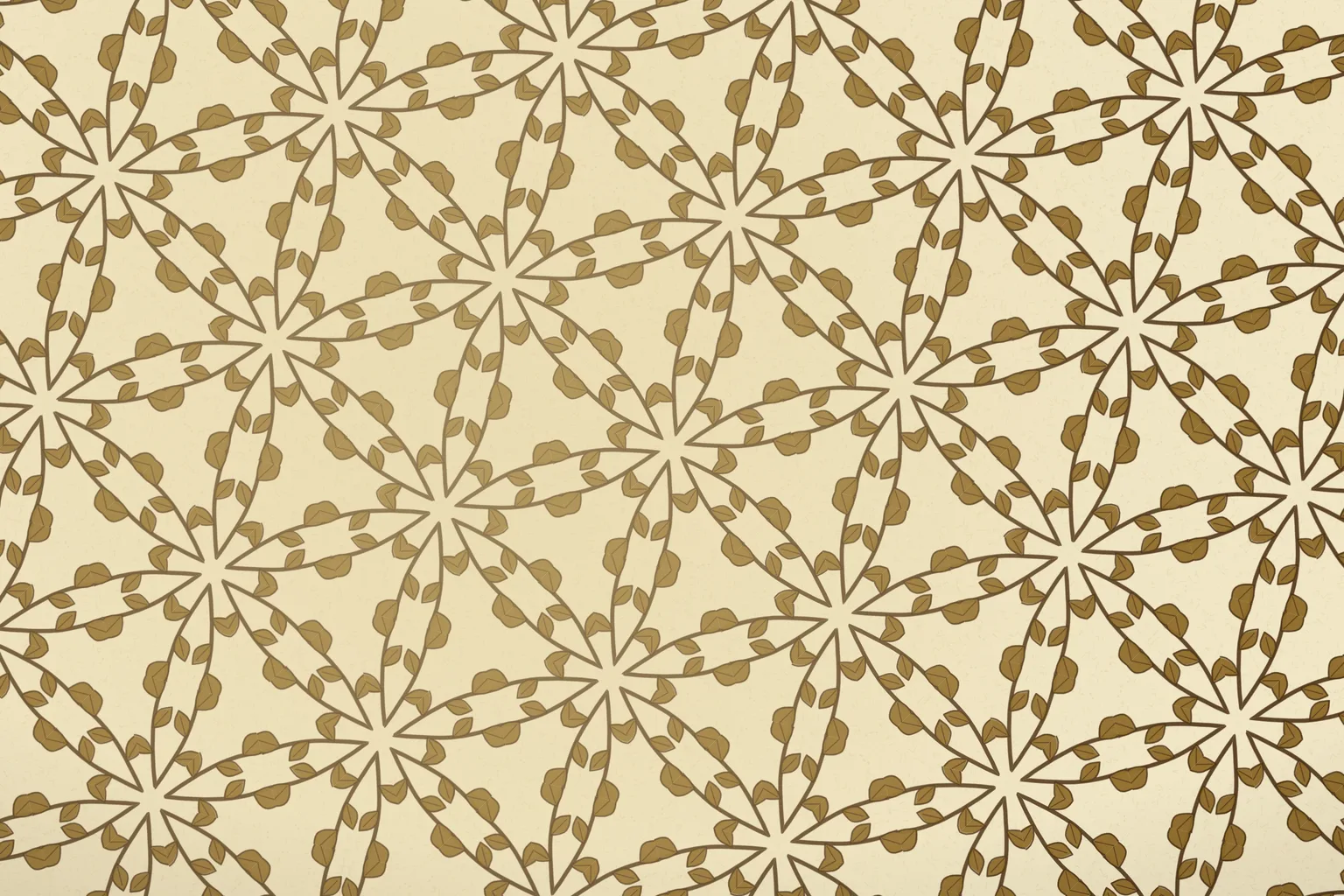
Every repeating pattern in the plane has one of seventeen symmetries, so every wallpaper does too. Papel Pintado draw...
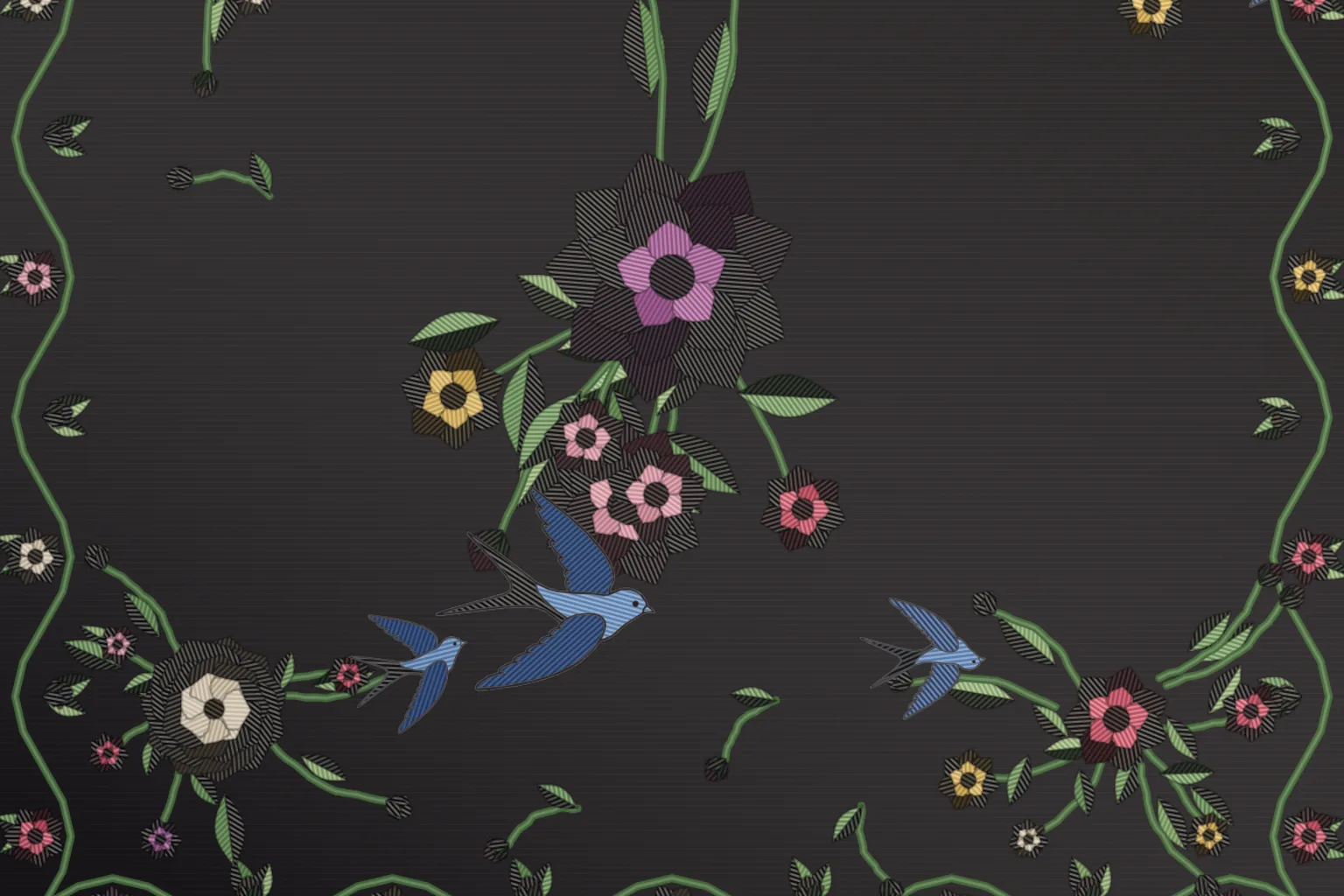
Two pieces about light on a material. Rejería is a wrought-iron grille on whitewash where the whole grille is cast as...
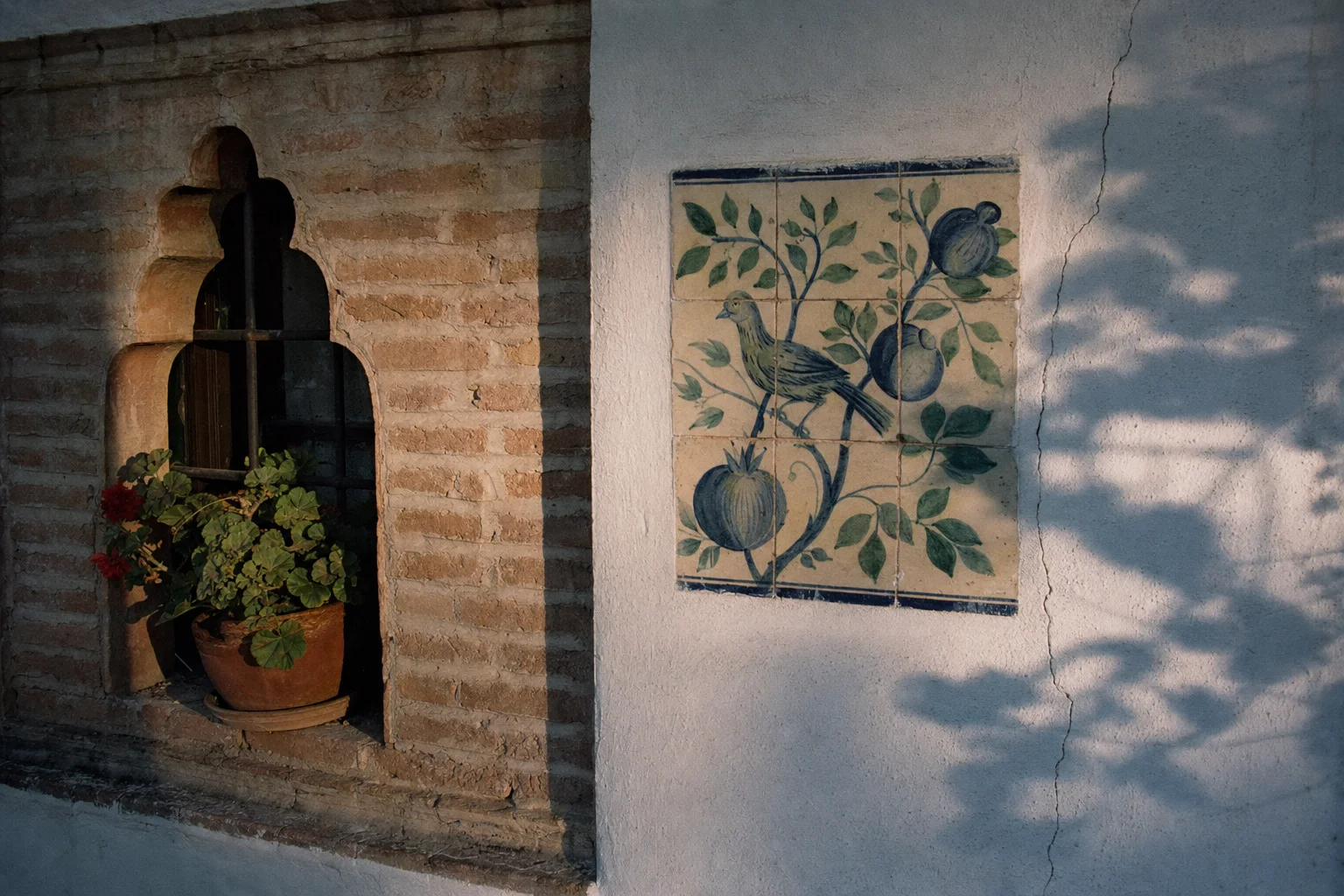
Sebka is the brick lattice of the Giralda with nothing drawn in shadow: every shadow is cast from three heights of wa...
Trencadís takes the painted tiles of Azulejería, smashes them with a Voronoi crack and lays the shards back on an und...
Knotwork is a page of Insular interlace grown on a grid: one parity rule for over and under, breaks that turn a plait...
Leonor is a hall of shields painted from sentences. A blazon grammar reads thirteenth-century English, the shields ar...
Two more walls for the art pages, neither of them painted. Alicatado puts Çini's star geometry through a cutter so ev...
How the Azulejería and Jerez art pages grow a tile wall from a seed: one diagonal-symmetric square, a brush that drif...